
Understanding the Difference Between Surgical Masks and N95 Respirators

In the post-pandemic world, understanding the differences between surgical masks and N95 respirators has become essential not only for healthcare professionals but also for the general public. These two protective products may look similar at first glance, yet their functions, design, and intended use differ greatly. Knowing which one to wear—and when—can make a significant difference in both safety and comfort.
In Australia, medical suppliers such as Biotech Medical Supplies provide both surgical masks and N95 respirators that meet rigorous safety standards. But before making a purchase, it’s worth learning how each type works, what makes them effective, and which situations call for one over the other.
What Exactly Is a Surgical Mask?
A surgical mask, sometimes called a medical or procedure mask, is a disposable face covering designed to act as a barrier between the wearer and the immediate environment. These masks protect the user from large droplets, splashes, and sprays of bodily fluids while also preventing the wearer from spreading respiratory droplets to others.
Surgical masks typically consist of three layers:
An outer hydrophobic layer that repels fluids such as blood or saliva.
A middle melt-blown layer, which functions as the primary filter for larger particles.
An inner absorbent layer that captures moisture from the wearer’s breath.
This three-layer structure is what makes surgical masks effective for droplet protection. However, because they are not designed to seal tightly around the nose and mouth, they allow air—and smaller airborne particles—to enter through the sides. That’s why surgical masks are not considered respirators.
In most healthcare and clinical settings, surgical masks are worn during standard patient care, minor procedures, and general examinations where the risk of aerosol exposure is low. They are lightweight, comfortable, and affordable, making them suitable for extended daily use in hospitals, aged care homes, or even household environments.
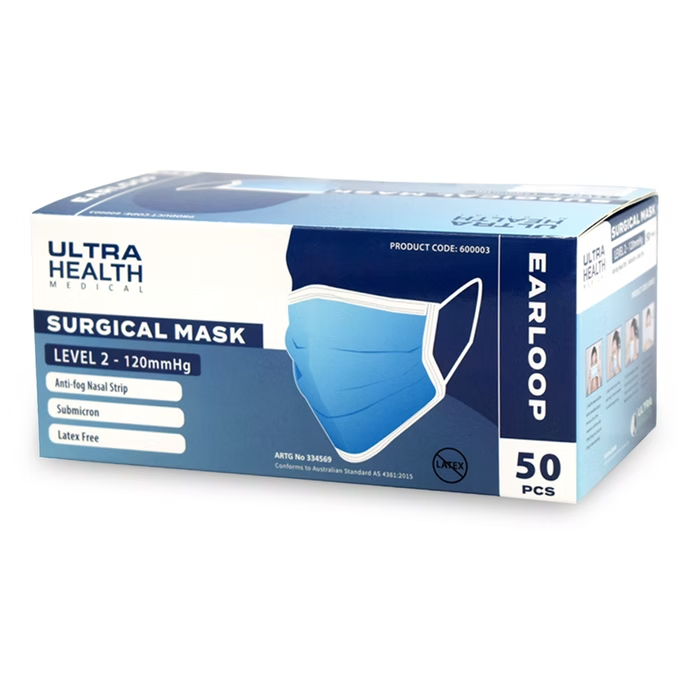
A good example of a reliable surgical mask is the Ultra Health Level 2 Mask. Designed to provide higher fluid resistance and comfort, it offers dependable protection for healthcare professionals who perform tasks involving splashes or sprays. Its Level 3 rating signifies that it meets one of the highest standards for fluid protection while maintaining breathability and comfort—an excellent option for clinics or dental practices.
What Is an N95 Respirator and How Does It Differ?
An N95 respirator is a respiratory protective device that provides a much tighter fit and higher filtration efficiency than a surgical mask. The “N95” designation means the respirator filters out at least 95 percent of airborne particles as small as 0.3 microns when properly fitted.
The material used in an N95 respirator includes electrostatically charged fibers, which attract and trap microscopic particles such as bacteria, viruses, and fine dust. Unlike surgical masks, which protect primarily against droplets, N95 respirators provide true airborne protection.
These respirators are essential in environments where airborne particles pose a health risk—such as during aerosol-generating medical procedures, in industrial workplaces, or in dusty agricultural and construction settings. Fit is critical; without a secure seal, the respirator’s efficiency can drop dramatically.
One example of a professional-grade option available is the Trident P2 /N95 Industrial Surgical Respirator. This model combines industrial-level filtration with surgical-grade performance, making it suitable for healthcare facilities, laboratories, and other high-risk workplaces. It’s designed for comfort during prolonged wear, featuring a dual-strap design and soft inner lining, all while maintaining the rigorous P2/N95 filtration efficiency standard.

The Core Differences Between Surgical Masks and N95 Respirators
Although both products cover the mouth and nose, their design philosophy and protective mechanisms differ substantially.
1. Filtration Efficiency
The main difference lies in how well they filter airborne particles.
A surgical mask primarily protects against large respiratory droplets (>5 microns). It’s effective at blocking saliva or mucus but not small aerosolized particles that may remain suspended in the air.
An N95 respirator, on the other hand, can filter at least 95% of particles down to 0.3 microns, including fine aerosols, smoke, and even some viruses.
This makes N95 respirators far more effective in high-risk environments such as hospitals, laboratories, or disaster zones where air quality is compromised.
2. Fit and Seal
A surgical mask is loose-fitting. It forms a partial barrier but allows unfiltered air to escape through the sides. This is sufficient for basic droplet protection but not for inhaling fine particles.
An N95 respirator, however, is engineered to seal tightly against the face. When worn correctly, it minimizes air leakage, ensuring that nearly all inhaled air passes through the filter material. Fit testing is often required in clinical or industrial settings to confirm the seal’s integrity.
This difference in fit is crucial: without proper sealing, even the best filtration material becomes ineffective.
3. Intended Use and Regulatory Standards
Surgical masks are classified as medical devices and are often regulated under standards like ASTM F2100 or EN 14683, depending on the country. They focus on bacterial filtration and fluid resistance.
N95 respirators (or their Australian equivalent, P2 respirators) are regulated as respiratory protective equipment (RPE). They must meet NIOSH N95, AS/NZS 1716:2012, or equivalent standards, which require performance testing for particle filtration, breathing resistance, and fit.
4. Comfort and Breathability
Surgical masks are usually lighter and easier to breathe through, making them ideal for long shifts where fluid resistance—not airborne filtration—is the priority. They’re comfortable for talking and communicating, especially in clinical and educational settings.
N95 respirators, by contrast, can feel slightly warmer and create higher breathing resistance because of their dense filtration layers. However, modern designs—like the Trident P2/N95—have improved airflow channels and soft linings to reduce discomfort during extended use.
5. Protection Direction
Surgical masks primarily protect others from the wearer’s respiratory emissions—they are a form of source control. N95 respirators, on the other hand, protect both the wearer and others, as they filter both incoming and outgoing air.

When Should You Use Each?
Choosing between a surgical mask and an N95 respirator depends on the environment and level of exposure risk.
Use Surgical Masks When:
You are in low-risk clinical settings, such as general consultations or outpatient areas.
The primary goal is droplet protection, not airborne filtration.
Comfort, breathability, and cost efficiency are important.
You want to protect others from your own respiratory emissions, such as when working in aged care or public settings.
The Ultra Health Level 2 Mask is a great example—it offers high fluid resistance for splash-heavy tasks while maintaining surgical comfort. It’s especially suited for dental clinics, general practices, and laboratory technicians performing light procedures.
Use N95 Respirators When:
You’re performing aerosol-generating medical procedures (like intubation or suction).
Working in environments with fine particles, such as construction sites, manufacturing, or bushfire response zones.
There is a confirmed or suspected presence of airborne pathogens.
You need protection in confined or poorly ventilated indoor spaces for long durations.
The Trident P2/N95 Respirator meets these requirements perfectly—providing industrial-grade protection with medical-level comfort and certification.

Proper Usage and Limitations
Even the best respirator or surgical mask can underperform if not used properly.
Fit is everything for N95 respirators. A small gap around the nose or chin can drastically reduce protection. Always perform a seal check before entering high-risk zones.
Surgical masks must be replaced regularly—especially if they become damp or soiled. A wet mask loses much of its filtering capacity.
Do not reuse single-use masks or respirators unless specifically allowed by manufacturer guidelines.
Handle by the ear loops or straps, not the front surface, to prevent contamination.
In healthcare environments, staff should receive fit-testing and training to ensure maximum safety. For the public, choosing a comfortable design and wearing it properly can make all the difference.
Understanding Layer Technology and Material Science
Modern mask technology combines multiple materials for different protective purposes. Surgical masks often use polypropylene melt-blown fibers, which create a fine mesh capable of filtering large droplets. N95 respirators enhance this with electrostatic charge technology—particles are attracted and held by static forces within the filter fibers, increasing efficiency without greatly reducing breathability.
Additionally, some respirators use multi-panel or cup-shaped designs to optimize airflow and maintain space around the nose and mouth. The Halyard FluidShield Lv3 model, for instance, incorporates an advanced foam nosepiece to reduce fogging and improve comfort for users wearing glasses or eye protection.
Environmental and Economic Considerations
While disposable masks and respirators are vital for infection control, sustainability remains a growing concern. Wherever possible:
Choose products with clear expiration dates and use them within recommended timeframes to avoid waste.
Purchase from reputable suppliers like Biotech Medical Supplies, which stock long-lasting, certified, and properly packaged options.
Dispose of used masks responsibly—cut the straps and place them in sealed bins to prevent environmental contamination.
In clinical settings, it often makes sense to keep a reliable supply of protective gear on hand. Opting for larger bulk packs—such as cartons of Trident P2/N95 respirators designed for industrial and surgical use, or Ultra Health Level 2 Surgical Mask that are TGA-approved and packaged for high-volume clinics—helps reduce packaging waste while ensuring your team never runs short during busy periods.
Comments